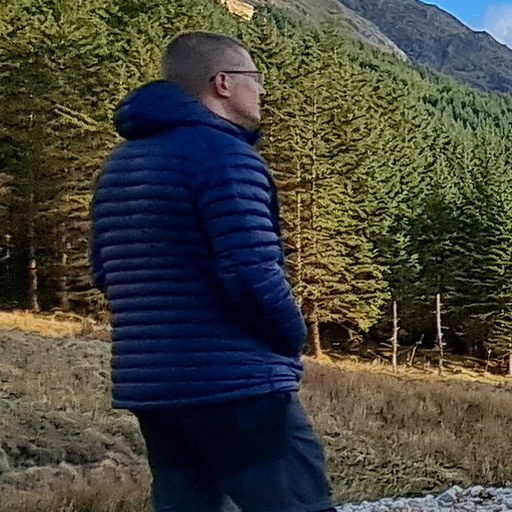
For the 129 km Wicklow Way you need a 30–40 litre pack, a reliable rain jacket and trousers, trail shoes with grip for wet granite and boardwalk, and one spare set of walking clothes. Staying in B&Bs over 5–7 days, aim for a 6–8 kg base weight — no camping gear required.
This is a short, efficient list because the Wicklow Way is a short, efficient trail: village accommodation every night, shops or pubs at most stage ends, and no stage more than a few hours from a road. Pack for persistent damp rather than expedition conditions, and check the Met Éireann forecast each morning — Wicklow weather is changeable but rarely vicious below 600 m.
The core kit, item by item
- Pack, 30–40 L — the Fjällräven Abisko Hike 35 is the textbook size for inn-to-inn walking; the roughly 480 g Zpacks Arc Scout 37L halves the weight for ultralighters; the Osprey Atmos AG 50 if you like spare capacity. Add a liner bag — 90 g of insurance.
- Rain jacket (15–20k hydrostatic head) and rain trousers — you will use both, probably on day one.
- Trail shoes or light boots with aggressive tread — Wicklow's hazards are slick boardwalk over White Hill and eroded granite gravel, not deep bog like Kerry.
- Walking clothes ×2 (merino tee, trousers/shorts, socks ×3) plus one warm layer — a 200-weight fleece or light synthetic jacket covers the 630 m high point even in summer.
- Evening set: lightweight trousers, tee, camp shoes (~650 g total).
- Blister kit, headtorch, 10,000 mAh power bank, offline GPX, 1.5–2 L water capacity.
- Sit pad and midge headnet, optional — June–August evenings at forest edges can be midgey, though far milder than Scotland.
Boots or trail runners for Wicklow?
| Criterion | Trail runners | Mid boots |
|---|---|---|
| Forest roads (≈40% of route) | Faster, cooler | Heavier, fine |
| Wet boardwalk & granite | Better rubber contact | Stiffer, can skate |
| Boggy upland (short sections) | Wet feet, dry overnight | Drier until overtopped |
| Verdict | Our pick May–Sep | Better Oct–Apr |
What you can leave at home
No tent, stove, filter or sleeping bag — and no full paper map library. The Way is waymarked with yellow walking-man posts at nearly every junction, and a downloaded GPX track covers the few ambiguous forest crossroads. Skip the second warm layer in summer; you are never more than 6 hours from a drying room. Do carry lunch and water from each morning: stages like Knockree to Roundwood (18 km) and Glenmalure to the southern villages have no mid-stage services at all, and the water sources drain forestry land you shouldn't drink from untreated. Weigh your final kit against the base weight calculator; if you're over 9 kg for a B&B walk, something on the list is lying to you.
Seasonal adjustments: what changes outside summer
The core list above assumes May to September. For April and October, add a second warm layer (a light down or synthetic vest, ~250 g) and swap to mid boots — the upland bog rehydrates fast once the evenings cool. From November to March the additions get serious: microspikes (~350 g) for the iced boardwalk over White Hill, a headtorch you'd trust for two hours of forest walking rather than ten minutes of emergency, gloves and a warm hat, and a group shelter or foil bivvy (110 g) for the exposed Djouce crossing. Winter walkers should also upsize water to 2 litres regardless of temperature — the shorter daylight pushes many into walking through lunch rather than stopping. Total winter penalty: roughly 1.2–1.5 kg over the summer kit, which still lands a B&B winter base weight under 9 kg. What stays constant in every month is the rain system; there is no season on this trail when the shell stays at the bottom of the pack for six days straight.
Getting there light: transport beats kit
The lightest item is a bus ticket. Dublin Bus route 16 reaches Marlay Park from the city centre in about 45 minutes, and stage towns like Roundwood and Tinahely have Transport for Ireland connections, so you can shuttle a forgotten item or skip a stage without a car. Luggage transfer runs about €10–15 per stage in 2026 if you'd rather walk with a daypack. For contrast, see what a longer, wetter Irish trail demands in our Camino Francés packing list companion piece — and if Wicklow is your warm-up for the Kerry Way, this same kit plus one extra warm layer and stronger rain trousers transfers straight across.
Frequently Asked Questions
What size pack do I need for the Wicklow Way?
A 30–40 litre pack is right for B&B walking on the Wicklow Way, carrying clothes, rain kit, lunch and 1.5–2 litres of water — about 7–9 kg total. Only campers using the trail's three Adirondack shelters need 50+ litres for a tent, bag and stove.
Do I need hiking boots for the Wicklow Way?
Not in summer. Around 40% of the route is forest road and most of the rest is good path or boardwalk, so grippy trail runners are the faster, more comfortable choice from May to September. In the wetter months, mid boots with gaiters keep feet drier on the upland sections.
Can you buy food along the Wicklow Way?
At stage ends, yes — Roundwood, Laragh/Glendalough, Tinahely and Shillelagh all have shops or pubs. Mid-stage there is almost nothing, so carry each day's lunch and snacks from the start. Roundwood's supermarket is the last full grocery until Tinahely if you're walking north to south.
Is the water safe to drink on the Wicklow Way?
Don't drink untreated from streams: most of the route crosses commercial forestry and grazed farmland. Carry 1.5–2 litres from each night's accommodation, which is enough for any stage in normal temperatures, or bring a small filter if you prefer topping up.
More Trail Planning
- Wicklow Way Itinerary: 5, 6 and 7-Day Stage Plans
- The Wicklow Way Is Easier Than You Think — With Three Exceptions
- Best Time to Walk the Wicklow Way in 2026
- Camino Francés Packing List 2026: What to Pack Under 7 kg
- Ausangate Trek Packing List: What to Pack for the Andes
- Kerry Way Packing List 2026: What to Pack for Ireland's Longest Trail